The Night Owl has always held a special place for Bruce Springsteen's 1987 release Tunnel of Love. Its oftimes intensely personal lyrics and more subtle melodies still lead us to conclude that this is The Boss' Blood On The Tracks.
But our treat to all of you on this feast of St. Valentine is an obscure audio recording of "Valentine's Day" from a 28 January 1988 band rehearsal at the Expo Center in Fort Monmouth, New Jersey. Backed by the E Street Band and The Horns of Love (Richie "La Bamba" Rosenberg and associates), its a shame the arrangement never saw the light of day.
This coming Tuesday 16 November Columbia Records will release the outtakes of Bruce Springsteen's Darkness On The Edge Of Town sessions, recorded back in 1977 and 1978. The Boss & The E Street Band had famously been away from the recording studio for almost three years due to a managerial dispute. But then Springsteen came to The Record Plant in New York City with a wealth of material, and this 21 (22?) track archive stands as a great double LP addition to his wonderful catalog.
The majority of the record could be peeled off and titled Born To Run 2.0. "Gotta Get That Feeling" is a full-on Phil Spector era tribute which could have been sung by one of his stable of great girl groups. (Hint to Darlene Love - make this your next single.) The British Invasion is revisited in "Outside Looking In" and The Righteous Brothers are bowed to with reverence via "Someday." And Bruce's deep affection for Memphis soul is reflected in two of the best tracks on the record: the call and response anthem "Ain't Good Enough" and the Miami Horns powered "It's A Shame," punctuated by a fine harmony vocal from Little Steven Van Zandt.
But The Promise also provides a glimpse of what an extended Darkness might have been. And while it's certainly hard to quibble with the tight structure of a four-star album, there are definitely some tunes that must have come close to making the cut. The title song and "One Way Street" are in the same vein. And a serious argument can be made for "Because The Night": alas, Springsteen couldn't find the right lyrical fit until he handed it off to Patti Smith, who then took her version to the Top 10 a year later.
What is also revelatory about this compilation are the compositions that ended up in the hands of or influenced other artists, showing the versatility of Bruce the songwriter: "Fire" (The Pointer Sisters), "Talk To Me" (Southside Johnny & The Asbury Jukes) and "City of Night" (certainly meant for Willy DeVille).
The Promise is no throwaway of odds and ends. It is a worthy addition to the Bruce Springsteen canon.
On this date in 1949, Bruce Frederick Joseph Springsteen is born to parents Adele and Douglas Springsteen at a hospital in Long Branch, New Jersey.
To celebrate, TNOP is bringing you video of one of the most heart-stopping live performances in rock and roll history. Hyperbole? We think not. This performance of what came to be known as the "Detroit Medley" is culled from a concert in Landover, Maryland on 24 November 1980. A year earlier, Bruce Springsteen & The E Street Band had introduced this mash-up to the masses at the "No Nukes" all-star concert at Madison Square Garden; the soundtrack, released in 1980, included the medley and quickly became an FM radio staple.
But this particular take finds Bruce and his mates in thrilling form, stretching out even further and taking the listener on a virtual tour of the roots of rock and roll, touching on many of the influences that Springsteen has openly bowed to over the years.
The take-off point is Mitch Ryder & The Detroit Wheels' "Devil With A Blue Dress," a blue-eyed soul stomper that, coupled with Little Richard's "Good Golly Miss Molly," shot to #4 in the US in 1966. Sandwiched between is "C. C. Rider," a song with roots as far back as Ma Rainey in the 1920s; it was most notably a hit for Chuck Willis and served as the opening number for Elvis Presley at his shows for many years. "Jenny Take A Ride!" makes an appearance as well, which Ryder also took into the Top 10, welding together "C. C. Rider" with Little Richard's "Jenny, Jenny." And finally there's the surprise inclusion of "Lonesome Train," a Johnny Burnette rockabilly chestnut that then evolves into a travelogue litany of American cities, a la James Brown's "Night Train."
So a tip of the hat to Mr. Springsteen on his 61st birthday, not only for his individual contributions to popular music, but for keeping the history of rock and roll alive and well through another couple of generations.
On this date in 1936, Charles Hardin Holley was born in Lubbock, Texas to Lawrence and Ella Holley. He would have been 74 years old today, had he not gone a-way.
Known always as "Buddy" to his parents and two older brothers, he learned to play various string instruments at an early age from them and starting singing with a junior high school friend at clubs and talent shows.
By the time Buddy was 19, he opened for Elvis Presley and Bill Haley & His Comets when the two stopped in Lubbock for concert appearances. Merging rockabilly with Chet Atkins style guitar, Buddy's unique "hiccup" vocals earned him a trip to Nashville. There he recorded some sides with his band The Crickets (Jerry Allison - drums; Joe B. Maudlin - bass; Niki Sullivan - guitar) for legendary producer Owen Bradley. A couple of those sessions resulted in a few sides released on Decca, and went nowhere. Decca didn't pick up a option to keep him on the label.
But agent and producer Norman Petty saw the potential in Holly and his mates. They recorded material in a more up-beat fashion in Clovis, New Mexico. Out of those sessions came the smash "That'll Be The Day" and "Peggy Sue," both of which were performed by Buddy Holly & The Crickets on The Ed Sullivan Show on 1 December 1957.
Most of you know the rest of the story, including the tragic plane crash that took the 22-year old Holly's life in 1959. But it is always worth mentioning the massive influence he has had on rock and roll history.
It wasn't just Elvis that helped bridge the divide between black rhythm and blues and white based country and swing. Buddy Holly & The Crickets eventually won over the tough audiences at Harlem's Apollo Theater, the only white group playing with pioneers Chuck Berry and Little Richard.
Forty years after Holly's death, Bob Dylan reminisced at the 1998 Grammy Awards in an acceptance speech about seeing The Crickets as a youth: "And I just want to say that when I was sixteen or seventeen years old, I went to see Buddy Holly play at Duluth National Guard Armory and I was three feet away from him...and he looked at me. And I just have some sort of feeling that he was — I don't know how or why — but I know he was with us all the time we were making this record in some kind of way."
The Beatles didn't just name their group as a nod of respect to The Crickets. The Fab Four regularly covered Holly in their days apprenticing in England and Germany. They also recorded "Words of Love" and "Mailman, Bring Me No More Blues." Paul McCartney holds the rights to the Buddy Holly song catalogue. George Harrison saw Holly as a youth and patterned his rockabilly style guitar licks after many of his recordings. John Lennon recorded "Peggy Sue" on his Rock 'n Roll covers album.
Keith Richards openly has discussed his admiration for Buddy Holly. He has been quoted as saying he too attended a Holly performance in London, where he heard "Not Fade Away" for the first time. The Rolling Stones' bone-shaking version of that song - itself a deep bow by Holly to Bo Diddley - is the classic version in the Holly covers canon.
Bruce Springsteen told Dave Marsh in 1978 that "I play Buddy Holly every night before I go on; that keeps me honest." The Boss has covered Holly on stage numerous times, including takes on "Not Fade Away" and "Rave On."
Seven Nights To Rock b/w "Honolulu Rock-A-Roll-A" Moon Mullican with Boyd Bennett and His Rockets Written by Buck Trail, Louis Innis & Henry Glover Produced by Syd Nathan & Henry Glover King Records Released March 1956
In the second of our four jukebox worthy singles written by pioneering music executive Henry Glover, we visit the brand new landscape of rock and roll, circa 1956. The charts are filled with songs like James Brown's "Please, Please, Please," Little Richard's "Long Tall Sally," Howlin' Wolf's "Smokestack Lightnin'" and Fats Domino's "I'm In Love Again."
And into this breach attempts to step a brazen, good timin' East Texan, Aubrey "Moon" Mullican. He first learned the guitar from a local sharecropper but then took up the pump organ and the piano (later famously remarking that he chose the latter because "my beer kept sliding off my fiddle"). By the time he was in his 20s, Mullican was playing in bands that were riding the wave of the Western Swing craze.
In 1946, Syd Nathan of King Records in Cincinnati signed Mullican to a long-term contract. An originator of the "two finger style" of piano playing, his songs were a mix of maudlin country ballads and blues and boogie tunes that anticipated the advent of rock and roll.
Increased sales of records on King allowed Moon Mullican to tour outside Texas. At a concert in 1949 he became friends with Hank Williams, which led to a regular gig on the Grand Ole Opry. A year later Moon had his first million selling song, "I'll Sail My Ship Alone." And there is evidence that he is the uncredited co-writer of the huge Hank hit "Jambalaya" (he received 50% royalties on the song). In his biography of Hank Williams, author Colin Escott unearths an interview in Country Song Roundup Magazine in which the immortal star mentions Moon as one of his personal favorites.
But while critics said that Mullican could sing honky tonk and sentimental tunes as well as anyone of the period, the performer wanted to "make the bottles bounce on the tables" with an array of blues and boogie tunes. He left the Opry and lit out on the road.
One of the most enduring cuts of Mullican's career would be 1956's "Seven Nights To Rock." Billboard described it at the time as "the guy spreads himself thin as he rocks with 7 different chicks in seven nights. A swinging bit of commercial wax that could connect at the juke level."
Unfortunately, it didn't. Why? Elvis and Little Richard, probably. Moon Mullican was a 245 pound bald man who was not going to break into that realm. The era of Bill Haley was quickly over, and Mullican was a casualty.
Moon continued to perform into the 1960s, basing himself out of Texas. He died on New Year's Day, 1967. Rock and roll pioneer Jerry Lee Lewis consistently lists Mullican as one of his two main influences, along with Hank Williams. And artists like Nick Lowe and Bruce Springsteen (don't miss The E Streeters version!) regularly cover "Seven Nights To Rock" to make sure new generations never forget that some songs -- even those 55 years old -- always rock.
Last night, Bruce Springsteen joined Alejandro Escovedo on stage at Asbury Park's Stone Pony. One of the world's great rock and roll venues, The Stone Pony has made its name by featuring early performances by local boys made good Southside Johnny, Jon Bon Jovi and, of course, Springsteen.
Maybe moved by the fact that it was Mick Jagger's 67th birthday, the two rockers tackled "Beast of Burden," the Rolling Stones' classic from Some Girls (check out the video above). Springsteen stayed on to duet on Escovedo's "Always A Friend" and "Faith" as well.
As with most Springsteen surprise appearances, he has a history with the artist he joins for some musical magic. In 2008, Escovedo joined The Boss in Houston to sing "Always A Friend." And Escovedo was the headline opener in the same year for The E Street Band at the massive and memorable Harley Davidson 105th Anniversary Bash, which drew a reported 100,000 fans to Milwaukee's lakefront.
"All Along The Watchtower" Neil Young & Bruce Springsteen Original Dylan version found on John Wesley Harding (1967)
Neil Young constitutes with Bob Dylan and Bruce Springsteen the great triad of 'moral' voices of American popular music. Their art is . . . first and foremost, a fusion of music and words that identifies with their era's zeitgeist. ---Piero Scaruffi, The History of Rock Music - The Sixties
While there is certainly room for vigorous intellectual discussion among rock music critics and fans as to the thesis above, there is no doubt that Bruce Springsteen and Neil Young are the closest disciples of Bob Dylan. Although more overtly political than their mentor, the duo have the innate ability to engage with a wide range of the listening public by weaving tales of the common man and his everyday struggles.
And so it was no accident that in the fall of 2004 in St. Paul, Minnesota, Neil Young joined Bruce Springsteen on stage to perform a unique version of "All Along The Watchtower." No accident, given the talent, experience and scars between them that the two had the chutzpah to take on the most famous Dylan cover of them all. No accident that the performance was a paint-peeling electric version in the Hendrix style that Dylan himself had adopted for 30 years. And certainly no accident that the summit of these two rock giants took place in Dylan's home state.
=============================================
"All Along The Watchtower" was one of the handful of songs that Bob Dylan reportedly penned in the aftermath of his famous (and mysterious) motorcycle accident in the summer of 1966. When the track was recorded for the John Wesley Harding album, Dylan - armed as usual with guitar and harmonica - was joined by Nashville studio vets Charlie McCoy on bass and Kenny Buttrey on drums. The LP was released at Christmas time in 1967. "Watchtower" was the second single in advance of the album being racked; Dylan recorded the song on 6 November and the 45 r.p.m. was delivered to record stores on 22 November. The single did not chart.
In October 1968, Dylan spoke with Happy Traum in an interview for Sing Out! magazine. He spoke of the nature of the tunes on John Wesley Harding, which were thought to be in sharp contrast to previous efforts. Dylan seemed to sense that the narrative change was jarring for some of his listeners: "I haven't fulfilled the balladeer's job. A balladeer can sit down and sing three songs for an hour and a half... it can all unfold to you. These melodies on John Wesley Harding lack this traditional sense of time. As with the third verse of 'The Wicked Messenger', which opens it up, and then the time schedule takes a jump and soon the song becomes wider... The same thing is true of the song 'All Along the Watchtower', which opens up in a slightly different way, in a stranger way, for we have the cycle of events working in a rather reverse order."
Of course, that was just the beginning of the notoriety of "All Along The Watchtower." The Jimi Hendrix Experience recorded the definitive version for its third album, Electric Ladyland. Dylan is on record about Hendrix's take on his song on at least two occasions. In the liner notes to Biograph, he says: "I liked Jimi Hendrix's record of this and ever since he died I've been doing it that way. . . Strange how when I sing it, I always feel it's a tribute to him in some kind of way." And in an interview with the Fort LauderdaleSun in 1995, Dylan stated: "It overwhelmed me, really. He had such talent, he could find things inside a song and vigorously develop them. He found things that other people wouldn't think of finding in there. He probably improved upon it by the spaces he was using. I took license with the song from his version, actually, and continue to do it to this day."
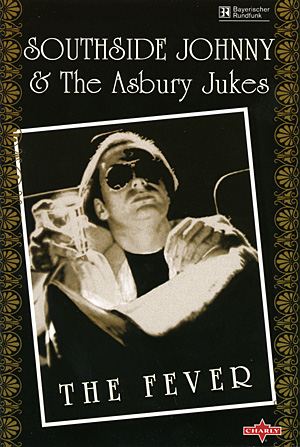
"The Fever" is a story of the mystery and mythology of rock and roll. And of local musicians and fans who at one time could define an entire area of the United States. And of the charm of independent radio and its enduring relationship with its listeners.
A young New Jersey native named Bruce Springsteen authored the song in question, some say as early as 1971. Of course, Springsteen would be "discovered" by impresario John Hammond (who had also brought Billie Hollday and Bob Dylan, among others, to Columbia Records) and his first album would be released in early 1973: Greetings From Asbury Park, N.J. was met mostly with shrugs. [Indeed, in retrospect, critic Lester Bangs stated that the consensus at the time was "many of us dismissed it: he wrote like Bob Dylan and Van Morrison, sang like Van Morrison and Robbie Robertson, and led a band that sounded like Van Morrison's."] "The Fever" wasn't on Greetings' track listing.
That summer, the E Streeters would go back in the studio and come out with a critical masterpiece. The Wild, The Innocent & The E Street Shuffle further increased their growing fan base, but did not make much noise on the commercial charts. It is said that during these sessions, the song first identified as "(I Got The Fever) For The Girl" (because of the singer's literal lament heading into the initial chorus) was recorded. Springsteen's manager at the time, Mike Appel, apparently sent out a special pressing of the song to a few select independent (or "underground") FM radio stations as a means of priming the pump for The Boss' third 33" LP that would shoot for the stars.
Now, let me just say that the paragraph immediately above is hearsay. Although it might be reliable hearsay, The Night Owl's first encounter with "The Fever" was simply by word of mouth from college students originally hailing from the Philadelphia and South Jersey areas who had seen the marathon live act of Springsteen and his band at clubs like The Main Line or The Stone Pony.
But when Bruce Springsteen landed on the cover of Time and Newsweek in the triumphant glow of that third album, Born To Run, in 1975, any leak of unreleased songs only added to the growing myth of The Boss. There are few songwriters - Dylan, Lennon & McCartney - that are prolific enough to contribute first rate tunes to other artists. But Springsteen has been able to do so time and again. "The Fever" is a prime example.
"Southside" Johnny Lyon had been a member of the Jersey Shore bar band scene since the early 1970s, playing in various bands with interchangeable members, including Springsteen, "Miami" Steve Van Zandt, Garry W. Tallent, David Sancious and Danny Federici, all of whom would be members of The E Street Band in future years. While Van Zandt would join Springsteen on the Born To Run tour and Lyon formed The Asbury Jukes, "Miami" Steve would maintain his association by producing a four-song EP for the band. It was pitched to Columbia subsidiary Epic, and The Jukes went into the studio in 1976 to record what would become I Don't Want To Go Home. With Van Zandt producing and contributing lead guitar, the album proved to be a paean to classic rhythm and blues, featuring not only Van Zandt's vocals and harmonica playing, but duets with soul giants Ronnie Spector and Lee Dorsey.
While the title track would prove to be song that the band would use as their closer for years to come, the true highlight of the debut was "The Fever." Listen to the original studio version here.
The faint organ rumbling summons up the middle of the night. Then Southside enters dramatically. His vocal has a swagger, but it's tempered by the humbling of the experience of yearning for his girl (. The call and response chorus, the blues harp, and The Miami Horns' blaring chart all result in a Stax-like explosion of soul revue heaven.
Springsteen would pull out "The Fever" on occasion in concerts over the years to come. It would be a song that Bruceologists would note with glee like some of the other hits he would pen for others ("Because The Night" or "Fire") or the covers he would throw in from time to time as a tribute to his personal heroes ("Quarter To Three" or "Twist and Shout"). The Boss' version would be a bit bluesier, as one can hear in this performance at Winterland in San Francisco in 1978. [The studio recording of "The Fever" would finally be released in the compilation Tracks 20 years later. The delay was probably a nod to the fact that Bruce knew that Southside had made "The Fever" his own. And The Boss, no doubt, was pleased that he helped make that happen for a Jersey compadre.]
While the memories of "lost" tracks make for good stories, there are certainly advantages to the new age of information technology. One of them is this film of Southside Johnny and Bruce sharing vocals on "The Fever." Backed by Clarence Clemmons on background vocal, Steve Van Zandt on lead, and The Miami Horns, the perfomance is from the Agora Club in Cleveland on August 31, 1978.
The class of 2010 for the Rock and Roll Hall of Fame has been announced. New inductees include The Stooges (that's Iggy Pop reading the - finally! - good news, above), Genesis, The Hollies, Jimmy Cliff and ABBA. But where are Darlene Love and Laura Nyro?
Mojo reports that Sly Stone has signed a new record deal. We'll believe it when we hear it. In the meantime, there are previews up on the web about a new documentary on the enigmatic artist that is set to premiere in 2010.
Can't say we go digging around in the News of the World too often, but their recent talk with Kinks-man Ray Davies proved fruitful: he's trying to gently coax brother Dave into the music arena again and is also working in the studio with Bruce Springsteen. And word is Julian Temple is directing a film of the brothers' rise to fame in the 1960s.
The xx performs a short set in The Current Studios of Minnesota Public Radio.
Issue 65 of The Faderis now available via free download. Special guest editors: Animal Collective.
We wrote in these pages previously about The History Channel special The People Speak. It premiered the other night and TNOP highly recommends a view. One of the highlights was Bob Dylan (acoustic guitar), Ry Cooder (electric guitar) and Van Dyke Parks (piano) performing Woody Guthrie's "Do Re Mi."TwentyFourBit gives us a look and listen.
That's it from the news desk for now. Go celebrate their induction by enjoying Iggy & The Stooges' "Search & Destroy" at MAXIMUM VOLUME. The video is from a 2008 performance in Montreal, and man, they still bring it, especially the late guitarist Ron Asheton.
John Fogerty talks to USA Today about making his long-gestating The Blue Ridge Rangers Rides Again. While the first 1973 Blue Ridge effort was a strictly solo affair, this time the CCR veteran uses a crack back-up band to interpret a unique set of covers. And Bruce Springsteen stops by to sing Don Everly harmonies to Fogerty's Phil-like lead on "When Will I Be Loved."
Muzzle of Bees links to a worthy Dylan cover to add to our - and your - collection: Andrew Bird's take on Desire's "Oh Sister," accompanied by the talented St. Vincent. Somewhere Bobby D and Emmylou Harris are nodding with approval.
UK harmony masters The Magic Numbers report that they are completing a new album, due for release in the spring. In the meantime, they are out on a short tour through England, Scotland, Wales and Ireland and invite you to download a new song for listening pleasure. The brother and sister act also pass along that they've recently collaborated with Mali's Amadou & Miriam as well, available via iTunes.
WXRT's (Spin and) Marty Lenertz has a review of the Rodrigo y Gabriella show last Friday night in Chicago. The dynamic acoustic guitar duo's latest, 11:11, will probably make a number of year-end "best of" lists.
The official closing of Giants Stadium in East Rutherford, New Jersey occurred last night. No, the Jets or the Giants didn't play football. It was the Heart Stoppin', Pants Droppin', House Rockin', Brain Shockin', Earthquakin', Booty Shakin', Viagra Takin', History Makin', Love Makin', Sexifyin', Electrifyin', Legendary. . .E Street Band! doing the honors over a five night stand over at the former swamps in Jersey.
Bruce Springsteen opened each show with "(Bring On Your) Wrecking Ball," a new song penned for the occasion. (A video performance is streaming at The Boss' website.) The Boss and the E Streeters have performed at the venue 24 times since 1984, the year Born In The USA shot into the rock stratosphere. Appropriately, that album was played sequentially from Side 1 through the end of Side 2 at three of the five closing concerts. (Born To Run occupied that slot the other two.) But that work was only part of an epic 31 song marathon, highlighted on the front end by "Spirit In The Night" and ending with a frenzy of figurative roof-raisers: "Born To Run"; the Stax/Eddie Floyd classic "Raise Your Hand"; the aptly chosen first #1 chart-topper of The Rolling Stones, "The Last Time"; rockabilly nugget "Seven Nights To Rock"; the Celtic-fused stomper "American Land"; and the much-loved, seldom performed "Kitty's Back."
With Springsteen calling "last dance," the band turned out the lights of Giants Stadium with Tom Waits' "Jersey Girl."
One week after celebrating his 60th birthday, The Boss and his bandmates continue to make their case as the greatest live act in the history of rock 'n roll.




 Posts
Posts


