SiteMeter

31 March 2010

Ultimate Singles Jukebox [Slot 115]


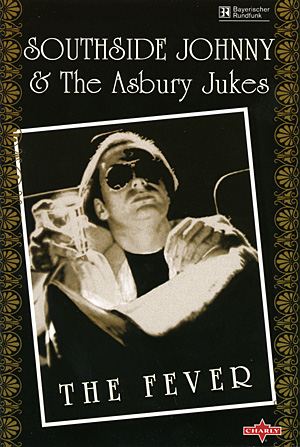
The Fever
Southside Johnny & The Asbury Jukes
Written by Bruce Springsteen
Produced by "Miami" Steve Van Zandt
Epic Records
Released 1976


"The Fever" is a story of the mystery and mythology of rock and roll. And of local musicians and fans who at one time could define an entire area of the United States. And of the charm of independent radio and its enduring relationship with its listeners.

A young New Jersey native named Bruce Springsteen authored the song in question, some say as early as 1971. Of course, Springsteen would be "discovered" by impresario John Hammond (who had also brought Billie Hollday and Bob Dylan, among others, to Columbia Records) and his first album would be released in early 1973: Greetings From Asbury Park, N.J. was met mostly with shrugs. [Indeed, in retrospect, critic Lester Bangs stated that the consensus at the time was "many of us dismissed it: he wrote like Bob Dylan and Van Morrison, sang like Van Morrison and Robbie Robertson, and led a band that sounded like Van Morrison's."] "The Fever" wasn't on Greetings' track listing.

That summer, the E Streeters would go back in the studio and come out with a critical masterpiece. The Wild, The Innocent & The E Street Shuffle further increased their growing fan base, but did not make much noise on the commercial charts. It is said that during these sessions, the song first identified as "(I Got The Fever) For The Girl" (because of the singer's literal lament heading into the initial chorus) was recorded. Springsteen's manager at the time, Mike Appel, apparently sent out a special pressing of the song to a few select independent (or "underground") FM radio stations as a means of priming the pump for The Boss' third 33" LP that would shoot for the stars.

Now, let me just say that the paragraph immediately above is hearsay. Although it might be reliable hearsay, The Night Owl's first encounter with "The Fever" was simply by word of mouth from college students originally hailing from the Philadelphia and South Jersey areas who had seen the marathon live act of Springsteen and his band at clubs like The Main Line or The Stone Pony.

But when Bruce Springsteen landed on the cover of Time and Newsweek in the triumphant glow of that third album, Born To Run, in 1975, any leak of unreleased songs only added to the growing myth of The Boss. There are few songwriters - Dylan, Lennon & McCartney - that are prolific enough to contribute first rate tunes to other artists. But Springsteen has been able to do so time and again. "The Fever" is a prime example.

"Southside" Johnny Lyon had been a member of the Jersey Shore bar band scene since the early 1970s, playing in various bands with interchangeable members, including Springsteen, "Miami" Steve Van Zandt, Garry W. Tallent, David Sancious and Danny Federici, all of whom would be members of The E Street Band in future years. While Van Zandt would join Springsteen on the Born To Run tour and Lyon formed The Asbury Jukes, "Miami" Steve would maintain his association by producing a four-song EP for the band. It was pitched to Columbia subsidiary Epic, and The Jukes went into the studio in 1976 to record what would become I Don't Want To Go Home. With Van Zandt producing and contributing lead guitar, the album proved to be a paean to classic rhythm and blues, featuring not only Van Zandt's vocals and harmonica playing, but duets with soul giants Ronnie Spector and Lee Dorsey.

While the title track would prove to be song that the band would use as their closer for years to come, the true highlight of the debut was "The Fever." Listen to the original studio version here.
The faint organ rumbling summons up the middle of the night. Then Southside enters dramatically. His vocal has a swagger, but it's tempered by the humbling of the experience of yearning for his girl (. The call and response chorus, the blues harp, and The Miami Horns' blaring chart all result in a Stax-like explosion of soul revue heaven.

Springsteen would pull out "The Fever" on occasion in concerts over the years to come. It would be a song that Bruceologists would note with glee like some of the other hits he would pen for others ("Because The Night" or "Fire") or the covers he would throw in from time to time as a tribute to his personal heroes ("Quarter To Three" or "Twist and Shout"). The Boss' version would be a bit bluesier, as one can hear in this performance at Winterland in San Francisco in 1978. [The studio recording of "The Fever" would finally be released in the compilation Tracks 20 years later. The delay was probably a nod to the fact that Bruce knew that Southside had made "The Fever" his own. And The Boss, no doubt, was pleased that he helped make that happen for a Jersey compadre.]

While the memories of "lost" tracks make for good stories, there are certainly advantages to the new age of information technology. One of them is this film of Southside Johnny and Bruce sharing vocals on "The Fever." Backed by Clarence Clemmons on background vocal, Steve Van Zandt on lead, and The Miami Horns, the perfomance is from the Agora Club in Cleveland on August 31, 1978.

30 March 2010

Crowded House Returns


TNOP favorite Crowded House, the New Zealand band that returned from a 14 year hiatus in 2007 with the solid release Time On Earth (and a world tour in support, including a stop in Milwaukee that we really enjoyed), is to release brand new music this coming June. The LP is Intriguer, produced by front man Neil Finn with an assist from engineer extraordinaire Jim Scott.

If you are one of the newer generation that hasn't been exposed to the whip-smart pop of Crowded House, we highly recommend starting with one of the better greatest hit compilations in the music catalog, Recurring Dream: The Very Best of Crowded House. You can thank us later.

To whet your appetite for Intriguer, here's a cut from the album, "Saturday Song," performed live by the boys on New Zealand's 3 News:


29 March 2010

This Date In Rock History: 29 March


The happiest of birthdays to eternal Python (and erstwhile Rutle) Eric Idle.

TNOP readers, we know it's Monday, the start of another work week. It's rainy in the East, cold in the Midwest, and tornadoes are touching down in the South. But cheer up! You know what they say . . .


28 March 2010

New LCD Soundsystem Single Leaks


The yet untitled LCD Soundsystem LP won't be released until 18 May. but over the weekend head man James Murphy leaked the first single for public listening. "Drunk Girls," a hard driving rocker reminiscent of the playfulness of "Daft Punk Is Playing At My House" - and that, of course, is a good thing - was dropped on the Pitchfork website. The lyrics are, um , interesting, reciting the attributes of drunk girls and the drawbacks of drunk boys. And that's rock and roll, kids.

In addition, a portion of another new track, "Pow Pow," was posted as well at Stereogum.

TNOP reported previously that LCD Soundsystem has scored the soundtrack to the new Noah Baumbach film "Greenberg," which opened this weekend nationwide in theaters. And they landed one of the plum spots at Coachella on 16 April.
31 March Update: Paste reports that the new album will be titled This Is Happening. View the cover art here.

25 March 2010

Rock 'n Film: "It Might Get Loud"


It Might Get Loud
Directed by Douglas Guggenheim
Sony Pictures Classics, 2009


Before the advent of high-definition television and accompanying pristine digital home sound systems, rock and roll films were better off being seen at your local movie palace. Many would argue that performance videos still exclusively demand a ultra-large cinema screen with Dolby crashing around one's visual and aural senses. For example, U2 3D played to large, rapturous crowds in IMAX theaters around the country in 2008, breaking further new commercial ground. And now studios and neighborhood theaters have upped the ante by investing in the 3D experience now that it has become more common and economical.

But one can make a compelling case that some of the newer rock films are best viewed in more intimate surroundings; Jonathan Demme's Neil Young: Heart of Gold (2006) and the American Masters' profile of Joni Mitchell, A Woman of Heart and Mind (2003), come immediately to mind.

Now add to that grouping It Might Get Loud, Douglas Guggenheim's portrait of, ironically, three electric guitar icons: Jimmy Page, The Edge and Jack White. Recently released on DVD, this documentary from 2009 provides a somewhat jagged, but linear progression of the development of this trio of compelling musicians, each from a successive generation of the rock canon.

James Patrick Page is first in line. With flowing white hair and sporting a stylish long gentleman's coat, the Londoner takes on the appearance of royalty, striding through the halls of the Headley Grange Estate that Led Zeppelin used to record some of its most famous songs. Alone with a guitar strapped on like a natural appendage, Page runs through the chord progression of "Ramble On" and describes his playing as a combination of techniques: "From a whisper to the thunder." [Think of all the rock music that flows from the 1970s to the present due to that one phrase.]

Page is attracted to the instrument by accident: a guitar was left behind at the home that he moved into as a child. He really becomes enamoured when the skiffle craze hits England in the 1950s. The young prodigy constantly strums his Stratocaster; he brings it to school and plays it at recess. Appearances on amateur shows lead to commercial work in professional studios at the age of 15. Soon disillusioned with playing rote jingles, Page breaks free and joins other musicians to find his own "voice" on guitar ("pop music was rubbish so I wasn't going to play that"). Most know the rest: noted rock sideman; Yardbirds ace; legendary lead guitarist with Zeppelin.

But the charm of It Might Get Loud lies with small moments captured with each of the three subjects. For Page, it is the invitation for the viewer to enter his special room chock full of vinyl. He picks out the 45 of Link Wray's "Rumble" and puts it on the a turntable. Page is transformed; the song is still a seminal moment in his development as a guitarist. As he grooves to it and pantomimes the chord progression, Page raves about the "profound attitude" of the instrumental hit.

Dave "The Edge" Evans recounts the magic of seeing his first guitar in the window at Stuyvesant Guitars in New York City while on vacation with his family. He still covets the Explorer he bought on that day. Then there is the visit to the Dublin school where The Edge found a bulletin board advert for a guitar player authored by one Larry Mullen Jr. U2 is born with a geek so taken with the instrument that he builds a guitar with his brother from scratch as a teen and starts a lifelong search for elusive sonic landscapes that no one else hears. [The Edge is even sport enough to jump up on the school's loading dock to recount the band's first gig.]

In a parallel to the muzak threat to Page's world, The Edge decries the fatuousness of the self-indulgence of rock in the mid-70s ("we knew what we didn't want to sound like"). Paired with the social and economic upheaval in Ireland, it is natural that the young Dubliners would be attracted to the punk sounds of The Jam, Buzzcocks, The Clash and The Ramones. It was freeing to The Edge: "My limitation as a musician was not a problem because I knew I could do that."

Some of the most interesting sequences in the movie center around The Edge's fiddling with his endless array of sonic toys in a Dublin warehouse. It is here that the music lover learns how much time and dedication it takes to glean a "sound" that is like no other. Say what you will about The Edge's guitar prowess, especially in comparison to Page or White; when you close your eyes and hear his style, it is like no other in rock. And that's saying alot.

We also meet John Gillis, born and raised in an economically depressed Detroit. But our first glimpse of "Jack White" is on a farm in Franklin, Tennessee. Using a piece of wood, a wire, an old Coke bottle and a simple electric pickup, White creates a make-shift guitar and slides a few blues notes for the camera crew. Ironically enough, the guitar isn't his first choice: he is instead drawn to the drums, probably due to predominance of hip-hop and house music in his neighborhood. But when working as a furniture upholsterer, White has his eureka moment when he sees hard-driving drum/guitar group Flat Duo Jets perform.

From there, things tend to get a little murky. It is almost like White has created a Dylanesque persona to meet his own musical - and commercial - goals. The famous Montgomery Ward Kay guitar is obtained at a St. Vincent de Paul thrift store, "as payment for helping move some stuff." The formation of The White Stripes is choreographed to the nth degree, from the ruse of identifying his wife Meg as his "sister" right down to the red, white and black marketing colors.

But while this act can be a bit off-putting at times, White's self-described immersion in the roots of rock and roll can be very interesting. His rumination on the guts of the blues (and devotion in particular to Son House) rivets the viewer - "A freight train in the minor key, representing antiestablishment, pain and tension: I found that this is where my soul rests too." Guggenheim then shows some live footage of White literally shredding his fingers on his guitar strings, blood smeared on the instrument's shiny body. White clearly is in love with what he does; from his rerigging of a Gretsch to appreciation of all music Americana, he is clearly a logical successor to the musical tree that spawned Page and then The Edge.

The much hyped super summit at the end of the film is almost anti-climatic. Why was a sterile Hollywood set chosen as the centerpiece after nearly 75 minutes of intimate visits with the three principals? Why a ragged performance of "The Weight" as the credits roll? Luckily, two minor moments, both courtesy of Led Zeppelin, leave us fulfilled: The Edge, standing at attention, and Jack White, literally putting down his guitar, both visibly in awe of Jimmy Page while he plays the coda to "Whole Lotta Love; and all three joyously playing "In My Time Of Dying" as a slow blues and then each soloing briefly, highlighting own their unique styles of playing the guitar.

It Might Get Loud proves once again that rock and roll is most affecting when it is simple and primal. And that's why every generation still finds its way back to Robert Johnson and Chuck Berry for true inspiration.

24 March 2010

Phoenix: Free Live Album Download

Faithful readers of TNOP know that French rockers Phoenix came in at a solid #2 in our list of Best Albums of 2009 with Wolfgang Amadeus Phoenix. Now the band has decided to tip their caps to the fans and provide a free eight song downloadable album entitled Live In Sydney. No sign-ups or e-mail required; just go to their site and click and listen.

Here's the track listing:
01 Lisztomania
02 Lasso
03 Fences
04 Girlfriend
05 Armistice
06 Love like a sunset
07 Rome
08 1901

23 March 2010

Newport Jazz Festival Lineup Announced


The lineup for this summer's Newport Jazz Festival was announced this morning. Wynton Marsalis, Jamie Callum, Jon Faddis, Randy Brecker, Chris Botti and Roy Haynes are among the noted artists filling the bill. But what has TNOP most excited is the treasure trove of keyboardists coming to the annual fest: Herbie Hancock, Chick Corea and personal favorite Ahmad Jamal. (Trivia: Chuck Berry cites Jamal by name in his "Go Go Go" - Backed up by the jazz band, layin' on the wood/Mixin' Ahmad Jamal in my Johnny B. Goode)

The Newport Jazz Festival takes place August 6, 7 & 8. Tickets go on sale Friday, March 26.

To whet your appetite, here's Jamal, accompanied by Idris Muhammad on drums and James Cammack on bass, performing "Poinciana" in 2005:


20 March 2010

Headline News


The Teletype's been clattering away here at TNOP World Headquarters, so we bring you this news . . .

Iranians Ash Koshanejad and Negar Shaghaghi are the twin songwriters of Take It Easy Hospital. They star in a new documentary called No One Knows About Persian Cats, which takes the viewer on a fictionalized account of the underground music scene in and around Tehran. The Guardian profiles the duo - who have since sought asylum in the UK - and previews the film, whose director has been arrested and jailed.

Jack White's a one-man PR machine. This week, he gave a lengthy interview to the New York Post and vigorously defended detractors of Meg White. "Her femininity and extreme minimalism are too much to take for some metalheads and reverse-contrarian hipsters," White told the paper. "She can do what those with 'technical prowess' can't. She inspires people to bash on pots and pans. For that, they repay her with gossip and judgement." He continued by saying that Meg has the last laugh over her critics. "In the end she's laughing all the way to the Prada handbag store," he said. "She wins every time." Then entertainment.ie reported that The Dead Weather's second LP will be released on May 7. Oh, and he's done a record with Shawn Carter, better known in music circles as Jay-Z, according to GQ.

Neil Young has teamed with Jonathan Demme again, this time resulting in Neil Young Trunk Show: Scenes From A Concert. Randy Lewis of the Los Angeles Times and Greg Kot of the Chicago Tribune offer their separate perspectives.

Smokey Bill Robinson was the deserved keynote speaker at SXSW Festival in Austin. Then he headlined a bill with this killer line-up: Raphael Saadiq, Sharon Jones and the Dap-Kings, Black Joe Lewis and the Honeybears, and Mayer Hawthorne. Phew. If you were there, leave us a comment!

And speaking of soul, The Times of London share the curious story of UK group Mama's Gun, sensations in . . . Japan. Give 'em a listen.

Uncut talks to Big Star bassist Ken Stringfellow, who says that he's trying to put together a tribute to Alex Chilton to conclude SXSW. Looks like Chuck Prophet, M. Ward and Cheap Trick are in, with others to follow.

Dirty Projectors stopped by a radio station in Australia and pulled out a cover of Bob Dylan's "Dark Eyes," the fairly obscure closer on Empire Burlesque. It's a beautiful arrangement and performance.

Here's some cool news: one of the more revered rock films - but up till now seen by only a handful of fans - has been refurbished and will be released this Tuesday. The T.A.M.I. Show from 1964 featured Marvin Gaye, The Rolling Stones, Chuck Berry, The Supremes, The Beach Boys and Smokey Robinson - all Rock and Roll Hall of Fame inductees. But the most memorable performance is by The Godfather of Soul, The Hardest Working Man In Show Business, Mr. Please, Please, Please: James Brown. USA Today gives us an inside preview.

In coordination with the release of their new album The Big To-Do, The Drive-By Truckers are profiled in The Village Voice.

The A.V. Club presents a fine seminar on Pub Rock.

David Byrne & Fatboy Slim's project centering on former Philippines first lady Imelda Marcos, Here Lies Love, comes out 6 April. Check out the track listing, snippets of the songs and a promotional video here. Guests include Santogold, St. Vincent, Nellie McKay, Sharon Jones and Roisin Murphy.

Beck has formed his latest "Record Club" group of musicians. This time they are tackling the INXS album Kick. Their first effort will be "Guns In The Sky." Let's watch INXS' original live in
1991 at Wembley Stadium.

18 March 2010

Tribute (In Memoriam): Alex Chilton


Children by the millions
Sing for Alex Chilton
When he comes 'round
They sing: "I'm in love. What's that song?
I'm in love with that song."
---The Replacements, "Alex Chilton"

Alex Chilton, the man with the blue-eyed soul voice that hit the charts several times as a teen-age singer with The Box Tops and influenced countless indie artists via his work with Big Star, has died of a heart attack in New Orleans, Louisiana at the age of 59.

Chilton, born in music rich Memphis, Tennessee, rose to prominence as the weathered voice of The Box Tops, who hit the charts with a string of hits, including "The Letter," "Cry Like A Baby," "Soul Deep" and "Neon Rainbow." He was only 16 at the time.

After The Box Tops broke up in 1970, Chilton performed solo for a couple of years, learning to play guitar in the process. He then joined forces with a trio of musicians and formed the group Big Star. The three albums produced in the 1970s - #1 Record; Radio City; and Third/Sister Lovers - were all critically acclaimed but failed commercially, in part because their record distributor, Memphis' once mighty Stax, had fallen on financial hard times.


Chilton then began a polarizing solo career and eventually moved to New Orleans. At one point in the 1980s he worked a variety of jobs and stopped playing music publicly.

With the advent of the "alternative" movement in that decade, bands like Athens, Georgia's R.E.M. and Minneapolis' The Replacements started citing the influence of Chilton, particularly his work with Big Star. "It's a fork in the road that a lot of different bands stemmed from," Jeff Powell, a respected Memphis producer who worked on some of Chilton's records told The Commercial Appeal . "If you're drawing a family tree of American music, they're definitely a branch."

The cult of Big Star moved a little into the mainstream at the turn of the century. A reconfigured line-up toured throughout the decade. That 70's Show used the band's "In The Street" as its theme song. Rolling Stone named all three of the Big Star albums referenced above to its 500 Greatest Albums of All Time. And in September 2009, the box set Keep An Eye On The Sky was released by Rhino Records to critical acclaim.

Big Star had been scheduled to play Austin's SXSW Festival this Saturday.

17 March 2010

Ascending: 4 From Ireland


by Celtic Ray (TNOP Correspondent, County Clare)

Our periodic review of up-and-coming Irish music artists reveals four more contenders for your consideration:

The Holy Roman Army

Chris and Laura Coffey, a brother and sister team from Co. Carlow, are starting to make their mark. Their brand of trip-hop "indietronica" is quite affecting. Their self-produced 2009 CD, How The Light Gets In (Collapsed Adult), yielded some fine and interesting moments, in particular "Stagger Gently Home":


Now, The Holy Roman Army has stepped into the limelight again with an EP of covers titled Desecrations. But the pleasant surprise is the project is not your typical stop-gap between records. The song selection is inspired and the interpretations are truly unique, particularly Bon Iver's "Skinny Love." Even better, you can download all five tracks for free! A great little EP for the iPod.

And So I Watch You From Afar

Don't be surprised if this Belfast instrumental quartet breaks out after storming SXSW in Austin, Texas this week. ASIWYFA released its EP The Letters to local acclaim about a year ago and have been trekking across the UK and the Republic crafting their trade since with thrilling live shows, much to the delight of fans like BBC Radio 1. A lengthy tour of Europe will commence at the end of this month, starting in Dublin and Derry.


Adrian Crowley

Galway singer-songwriter Crowley rang the bell this past month when he was named recipient of the Choice Music Prize for Irish Album of the Year. Season of the Sparks is his fourth proper release and continues a soft, spell-binding style accented by deft playing of hollow-bodied electric guitar. Ryan Adams proclaimed in an interview with Rolling Stone in 2005 that Crowley was "one of the best songwriters no one's has heard of."


Lisa Hannigan

One of TNOP's favorite albums of 2009 was Hannigan's Sea Sew. (It was nominated for the Mercury Prize as well as the Choice Music Prize.) The Co. Meath multi-instrumentalist made her bones through her pivotal singing role on Damien Rice's classic O. The combination of Joni Mitchell and Nina Simone influences result in a winning style.


Beannachtai na Feile Padraig!
Slainte,
Ray