SiteMeter

Showing posts with label little steven van zandt. Show all posts

12 November 2010

Sneak Preview of Bruce Springsteen's "The Promise"

This coming Tuesday 16 November Columbia Records will release the outtakes of Bruce Springsteen's Darkness On The Edge Of Town sessions, recorded back in 1977 and 1978. The Boss & The E Street Band had famously been away from the recording studio for almost three years due to a managerial dispute. But then Springsteen came to The Record Plant in New York City with a wealth of material, and this 21 (22?) track archive stands as a great double LP addition to his wonderful catalog.

The majority of the record could be peeled off and titled Born To Run 2.0. "Gotta Get That Feeling" is a full-on Phil Spector era tribute which could have been sung by one of his stable of great girl groups. (Hint to Darlene Love - make this your next single.) The British Invasion is revisited in "Outside Looking In" and The Righteous Brothers are bowed to with reverence via "Someday." And Bruce's deep affection for Memphis soul is reflected in two of the best tracks on the record: the call and response anthem "Ain't Good Enough" and the Miami Horns powered "It's A Shame," punctuated by a fine harmony vocal from Little Steven Van Zandt.

But The Promise also provides a glimpse of what an extended Darkness might have been. And while it's certainly hard to quibble with the tight structure of a four-star album, there are definitely some tunes that must have come close to making the cut. The title song and "One Way Street" are in the same vein. And a serious argument can be made for "Because The Night": alas, Springsteen couldn't find the right lyrical fit until he handed it off to Patti Smith, who then took her version to the Top 10 a year later.

What is also revelatory about this compilation are the compositions that ended up in the hands of or influenced other artists, showing the versatility of Bruce the songwriter: "Fire" (The Pointer Sisters), "Talk To Me" (Southside Johnny & The Asbury Jukes) and "City of Night" (certainly meant for Willy DeVille).

The Promise is no throwaway of odds and ends. It is a worthy addition to the Bruce Springsteen canon.

===================================
Preview The Promise in its entirety (via Spinner.com), and enjoy the promotional film below.


25 April 2010

The (Young) Rascals Reunite (with UPDATE!)


In the words of one of their songs, "It's Wonderful."

One of the top purveyors of blue-eyed rock and soul, The Young Rascals rode a wave of Top 40 hits in the late 1960s all the way to induction in the Rock and Roll Hall of Fame. But they hadn't appeared and played together in public for 40 (count 'em) years . . . until last night in New York. With the (persistent) assistance of fellow New Jersey native Little Steven Van Zandt and his wife Maureen, the quartet performed at a benefit for the Kristen Ann Carr Fund at Robert De Niro's Tribeca Grill.

"We first met around 1980 to discuss reuniting the band and have tried every five years or so," Stevie said. "Maureen suggested we give it one more shot and sure enough it took Kristen's amazing spirit to finally get it done."

"I speak on behalf of the band when I say all the money offers in the world could not entice the Rascals to reunite," said guitarist Gene Cornish, "but four phone calls from Stevie and without hesitation we enthusiastically and immediately agreed to both support this wonderful cause and honor Stevie and Maureen."

Here are Felix Cavaliere (organ, vocals), Eddie Brigati (vocals), Gene Cornish (guitar) and Dino Danelli (drums) from a March 1966 episode of The Ed Sullivan Show:


UPDATE!
The set list from the show Saturday night below reads like a gold-plated jukebox. And if you want to listen to the complete show (including the guest shot by The Boss on "Good Lovin'," just click here.)

Setlist (tip of the hat to VintageVinyl):

I’ve Been Lonely Too Long
In The Midnight Hour
I Ain’t Gonna Eat Out My Heart Anymore
You Better Run
It’s A Beautiful Morning
Love Is A Beautiful Thing
Groovin’
A Girl Like You
How Can I Be Sure
Come On Up
What Is The Reason
People Got To Be Free
Good Lovin’ (with Bruce Springsteen)

31 March 2010

Ultimate Singles Jukebox [Slot 115]


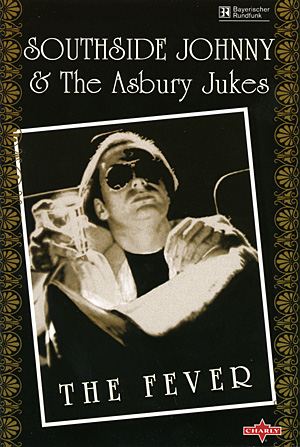
The Fever
Southside Johnny & The Asbury Jukes
Written by Bruce Springsteen
Produced by "Miami" Steve Van Zandt
Epic Records
Released 1976


"The Fever" is a story of the mystery and mythology of rock and roll. And of local musicians and fans who at one time could define an entire area of the United States. And of the charm of independent radio and its enduring relationship with its listeners.

A young New Jersey native named Bruce Springsteen authored the song in question, some say as early as 1971. Of course, Springsteen would be "discovered" by impresario John Hammond (who had also brought Billie Hollday and Bob Dylan, among others, to Columbia Records) and his first album would be released in early 1973: Greetings From Asbury Park, N.J. was met mostly with shrugs. [Indeed, in retrospect, critic Lester Bangs stated that the consensus at the time was "many of us dismissed it: he wrote like Bob Dylan and Van Morrison, sang like Van Morrison and Robbie Robertson, and led a band that sounded like Van Morrison's."] "The Fever" wasn't on Greetings' track listing.

That summer, the E Streeters would go back in the studio and come out with a critical masterpiece. The Wild, The Innocent & The E Street Shuffle further increased their growing fan base, but did not make much noise on the commercial charts. It is said that during these sessions, the song first identified as "(I Got The Fever) For The Girl" (because of the singer's literal lament heading into the initial chorus) was recorded. Springsteen's manager at the time, Mike Appel, apparently sent out a special pressing of the song to a few select independent (or "underground") FM radio stations as a means of priming the pump for The Boss' third 33" LP that would shoot for the stars.

Now, let me just say that the paragraph immediately above is hearsay. Although it might be reliable hearsay, The Night Owl's first encounter with "The Fever" was simply by word of mouth from college students originally hailing from the Philadelphia and South Jersey areas who had seen the marathon live act of Springsteen and his band at clubs like The Main Line or The Stone Pony.

But when Bruce Springsteen landed on the cover of Time and Newsweek in the triumphant glow of that third album, Born To Run, in 1975, any leak of unreleased songs only added to the growing myth of The Boss. There are few songwriters - Dylan, Lennon & McCartney - that are prolific enough to contribute first rate tunes to other artists. But Springsteen has been able to do so time and again. "The Fever" is a prime example.

"Southside" Johnny Lyon had been a member of the Jersey Shore bar band scene since the early 1970s, playing in various bands with interchangeable members, including Springsteen, "Miami" Steve Van Zandt, Garry W. Tallent, David Sancious and Danny Federici, all of whom would be members of The E Street Band in future years. While Van Zandt would join Springsteen on the Born To Run tour and Lyon formed The Asbury Jukes, "Miami" Steve would maintain his association by producing a four-song EP for the band. It was pitched to Columbia subsidiary Epic, and The Jukes went into the studio in 1976 to record what would become I Don't Want To Go Home. With Van Zandt producing and contributing lead guitar, the album proved to be a paean to classic rhythm and blues, featuring not only Van Zandt's vocals and harmonica playing, but duets with soul giants Ronnie Spector and Lee Dorsey.

While the title track would prove to be song that the band would use as their closer for years to come, the true highlight of the debut was "The Fever." Listen to the original studio version here.
The faint organ rumbling summons up the middle of the night. Then Southside enters dramatically. His vocal has a swagger, but it's tempered by the humbling of the experience of yearning for his girl (. The call and response chorus, the blues harp, and The Miami Horns' blaring chart all result in a Stax-like explosion of soul revue heaven.

Springsteen would pull out "The Fever" on occasion in concerts over the years to come. It would be a song that Bruceologists would note with glee like some of the other hits he would pen for others ("Because The Night" or "Fire") or the covers he would throw in from time to time as a tribute to his personal heroes ("Quarter To Three" or "Twist and Shout"). The Boss' version would be a bit bluesier, as one can hear in this performance at Winterland in San Francisco in 1978. [The studio recording of "The Fever" would finally be released in the compilation Tracks 20 years later. The delay was probably a nod to the fact that Bruce knew that Southside had made "The Fever" his own. And The Boss, no doubt, was pleased that he helped make that happen for a Jersey compadre.]

While the memories of "lost" tracks make for good stories, there are certainly advantages to the new age of information technology. One of them is this film of Southside Johnny and Bruce sharing vocals on "The Fever." Backed by Clarence Clemmons on background vocal, Steve Van Zandt on lead, and The Miami Horns, the perfomance is from the Agora Club in Cleveland on August 31, 1978.

11 February 2010

Ultimate Singles Jukebox [Slots 111 & 112]


Nelson Mandela
b/w Break Down The Door!
The Special AKA
Written by Jerry Dammers
Produced by Elvis Costello
2 Tone CHS TT26
Released 17 April 1984

In the late 1970s and early 1980s, the English music scene was bubbling not only with the punk movement. In what was to become a complimentary sound as many punk artists matured, the revival of Jamaican ska - the precursor to rocksteady and reggae - swept the UK. Coventry native Jerry Dammers was a leading promoter of ska, both as a businessman as well as a musician. Forming the record label 2 Tone, Dammers' multi-racial group The Specials stormed the charts with such hits as "Ghost Town" and "A Message To You, Rudy." Label mates The (English) Beat, The Selecter and Madness also made a significant mark on the genre.

But by 1984, Dammers appeared to be a spent force. Three key members of The Specials left the band and formed Fun Boy Three. Personal issues were plaguing Dammers as well. Recalling a lot of idle time spent in the studio, struggling to finish a new album with replacement musicians, he recalled: "Part of it was my fault; I was working ideas out in the studio. Then there were a lot of other problems - drink, drugs, mental illness, across the board! I was very down after the Fun Boy Three left."

But Dammers had a tune in his head that he needed to get out. "Rock music was dead," Dammers recalled, "It was all electro-pop, hip hop, jazz or Latin. And also, Joe Hagen had this African club at Gossip's. I was inspired by the spirit and positivity of that African music. I was trying to get in a few Latin rhythms, but also township jazz." Lyrically, Dammers thought the song had to be on the scale of "Ghost Town," whose theme had been UK-wide unemployment, with not-too-subtle finger-pointing at the Thatcher government.

Then Dammers attended a 65th birthday party at Alexandra Palace for a man he - and the vast majority of others in the room - had never met: Nelson Mandela, the South African leader who had been languishing in a Robben Island, South Africa prison for 21 years. "I'd never heard of him, to be honest," Dammers said. "Various bands sang about him, particularly Julian Bahula. And that's where I got the idea to put this message into this tune I had hanging around."

For "Nelson Mandela," producer Elvis Costello brought in backing singers Afrodiziak and their opening a capella refrain makes the record memorable from the get-go. Then a lazy horn chart becomes a dance hall frenzy, and lead vocalist Stan Campbell takes the reins, educating the masses on the ANC leader that no one had heard from in almost a generation.

Dammers liked that he had crafted "a very simple melody, three notes - C, A and E. That meant the public could sing it." It went to #9 on the UK charts. The song, banned in South Africa, would nevertheless be heard in townships all over South Africa. And it was the centerpiece of the Mandela 70th birthday show, televised in June 1988 and viewed by 600 million people.

Twenty years ago today, Nelson Mandela was released from prison. After being awarded the Nobel Peace Prize in 1993, he went on to become the elected President of South Africa, serving from 1994 to 1999. Currently 91 years old, Mandela is one of the most recognizable figures in the world.

WATCH "Nelson Mandela" by The Special AKA.


Sun City
Artists United Against Apartheid
Written by Steven Van Zandt
Produced by Steven Van Zandt and Arthur Baker
EMI Manhattan Records
Released 7 December 1985

Meanwhile, in the United States, "Little" Steven Van Zandt left the gig of a lifetime - voluntarily - in 1984 when he split from Bruce Springsteen's E Street Band. He then turned to more overtly political causes, mainly aiming at Reagan-era foreign policy issues.

A fancy resort in South Africa called Sun City had become a vacation haven for the internationally rich and famous, with notable entertainers (including Queen, Elton John, Ray Charles and Rod Stewart) being paid huge sums of money to perform before them. In response, Van Zandt organized Artists United Against Apartheid, whose members pledged not to play in South Africa while the apartheid regime was still in power.

The resulting musical project included the Van Zandt penned "Sun City," a militant stomp aggressively produced with Arthur Baker and performed by 49 notable musicians. Enjoy the intro by the great Miles Davis and then see how many stars you can spot in the video: