Sargent Shriver, architect of the Peace Corps and, with his late wife Eunice Kennedy Shriver, creator of the Special Olympics, was eulogized at a funeral mass in suburban Washington D.C. yesterday by many family members and dignitaries. What struck us as particularly touching and apt for a life well lived was the singing of two Dubliners - Bono, accompanied by Glen Hansard - of the Peace Prayer of St. Francis.
The Associated Press reports this morning that mounting pressure from regional neighbors may finally convince the military junta of the nation of Myanmar (formerly known as Burma) to release Nobel Peace Prize winner Aung San Suu Kyi after elections are held in mid-November. The democracy icon has been imprisoned or held under house custody for 15 of the last 21 years. (In 1990, she received 82 percent of the vote in her country's elections, but was denied power by the ruling dictatorship.)
The talented, but publicly withdrawn, Irish singer-songwriter Damien Rice was approached by the US Campaign For Burma back in 2005 with a request to contribute an existing song for a benefit album to call attention to the plight of Aung San Suu Kyi. In an rare interview that year with The Guardian, Rice did not want to be pictured as another Bob Geldof, and was loath to be seen as a political activist: "He is just a regular guy, he says somewhat beseechingly, a musician 'who has seen something that is wrong and is trying, in some small way, to help'."
After visiting Burma and learning more about the situation, Rice penned an original piece entitled "Unplayed Piano," one of the more affecting songs of the past decade. A duet with then-partner Lisa Hannigan, the lyrics spotlight the isolation of the prisoner and a solemn, but respectful, plea to not forget a leader in what is now one of the most closed countries in the world:
Unplayed pianos Are often by a window In a room where nobody loved goes She sits alone with her silent song Somebody bring her home
Here are Rice & Hannigan performing "Unplayed Piano" at the Nobel Concert in Oslo in 2005:
Because of the 9/11 attacks and U2's appearance on a national US television special shortly thereafter performing "Walk On," that song is associated with uplifting the spirit of Americans in the wake of the deadly terrorist actions. But the lyrics written by Bono for "Walk On" are actually inspired by Aung San Suu Kyi. In a piece written for a website dedicated to the Burma leader's well-being and release, the Dublin bard writes:
Suu Kyi is a real hero in an age of phony phone-in celebrity, which hands out that title freely to the most spoiled and under qualified. Her quiet voice of reason makes the world look noisy, mad; it is a low mantra of grace in an age of terror, a reminder of everything we take for granted and just what it can take to get it. Thinking of her, you can’t help but use anachronistic language of duty and personal sacrifice.
U2 wrote the song “Walk On” to honor this amazing woman who put family second to country, who for her convictions made an unbearable choice—not to see her sons grow and not to be with her husband as he lost his life to a long and painful cancer. Suu Kyi, with an idea too big for any jail and a spirit too strong for any army, changes our view—as only real heroes can–of what we believe to be possible. The jury is still out on whether we deserve the faith she has put in us.
U2 has used "Walk On" as a centerpiece in many of its concerts, inviting Amnesty International and One volunteers to the stage who don Aung San Suu Kyi masks and hold lanterns in tribute to the peace prize winner.
The resumption of the U2 360 Tour, which was to begin again on 3 June in Salt Lake City, Utah, has been indefinitely postponed. Lead singer Bono underwent emergency back surgery in Munich, Germany earlier today due to an injury sustained while rehearsing with the band.
Check out the official U2 site for an announcement by long-time band manager Paul McGuinness and further updates, including ticket information.
=================================================== I know claiming Bob Marley as Irish might be a little difficult here tonight, but bear with me. Jamaica and Ireland have lots in common... Naomi Campbell, Chris Blackwell, a fondness for little green leaves... the weed... religion... the philosophy of procrastination (don't put off till tomorrow what you can put off till the day after)... unless of course it's freedom. We are both islands, we're both colonies - JAMAICA IRELAND - ... the common yoke... the struggle for identity, the struggle for independence... the vulnerable and uncertain future that is left behind when the jackboot of empire has finally retreated.... roots... the getting up, the standing up - and the hard bit - the staying up. In such a struggle, an often violent struggle, the voice of Bob Marley was a voice of reason so when I heard Bob Marley first I not only felt it, I felt I understood it. It was 1976 in Dublin, we were listening to punk...it was The Clash who brought him home to us, that and E.C.'s cover of 'I Shot the Sheriff'. Bob Marley and the Wailers had love songs you could admit listening to, songs of hurt...hard but healing... Tuff Gong politics without rhetoric, songs of freedom where that word meant something again, new hymns to a dancing God, redemption songs, a sexy revolution where Jah is Jehovah on street level not over his people ... with His people not just stylin... jamming' the lion of Judah down the line of Judah from Ethiopia where it all began for the rastamen, where everything began...well maybe. I spent some time in Ethiopia with my wife Ali and everywhere we went we saw Bob Marley's face... wise, royal, Solomon and the queen of Sheba on every street corner, there he was, dressed to hustle God... 'let my people go' an ancient plea...prayers catching fire in Mozambique, Nigeria, The Lebanon, Alabama, Detroit, NEW YORK CITY, Notting Hill, Belfast... a king in dreads... a third and first world super star. Mental slavery ends where imagination begins... here was this new music rocking out of the shantytowns, born from calypso and raised on the chilled out r 'n' b, beamed in from New Orleans... lolling lopping rhythms... telling it like it is, like it was, like it ever shall be...skanking mon! Ska, Bluebeat, Rocksteady, Reggae, dub and now ragga... and all of this from a man who drove 3 BMWs, BMW!? BOB MARLEY AND THE WAILERS!!! (that was his excuse!) rock and roll loves its juvenilia, its caricatures, its cartoons, the protest singer, the gospel singer, the popstar, the sex god and of course... your more mature messiah types?! we love extremes and we're expected to choose... the mud of the blues or the oxygen of gospel, the 'hellhound on our trail' or the 'band of angels'. Marley didn't choose or didn't walk down the middle, he raced to the edges embracing all extremes and creating a oneness. He wanted everything at the same time and was every thing at the same time... prophet, soul rebel, rasta man, herbsman, wild man, a natural mystic man, ladies man, island man, soccer man, family man, Rita's man, showman, shaman, human, JAMAICAN.
---Bono, "Induction Song" (Rock and Roll Hall of Fame Special Awards Ceremony, 1994)
Sufjan Stevens "Ring Them Bells" Original Dylan version found on Oh Mercy (1989)
[Ed. note: Regular readers of this blog know that Bob Dylan is affectionately referred to as the "Patron Saint" of TNOP. This weekly feature sifts through the thousands of cover versions of Dylan songs and provides you with our favorites, as well as a quick memory of our first exposure to the Dylan original.]
Sufjan Stevens is a native Michigander who has been a prolific singer-songwriter over the past ten years. A multi-instrumentalist, Stevens' unique voice on the music scene has drawn both heavy critical praise as well as a few accusations of pretentious navel gazing.
Regardless of personal opinion, there is to be no argument that Stevens makes selected songs of other artists he admires (Joni Mitchell, Daniel Johnston and Lennon/McCartney, for example) his "own," rearranging melody and sometimes adding new verses. This Dylan cover is no less different.
When one considers the whole of Stevens' career to date, his selection of Dylan's "Ring Them Bells" for inclusion in the I'm Not There soundtrack makes perfect sense. The themes of faith and justice weave themselves through Stevens' albums, but in a subtle way. As he told The Village Voice in 2005, "I don't think music media is the real forum for theological discussions. I think I've said things and sung about things that probably weren't appropriate for this kind of forum. And I just feel like it's not my work or my place to be making claims and statements, because I often think it's misunderstood."
************************************* Like many a Dylan fan(atic) back in 1989, the pending release of a new album from my favorite artist was a reason for cautious excitement. While Down In The Groove and Knocked Out Loaded were bitter disappointments, and the much-ballyhooed tours with Tom Petty and The Grateful Dead mostly hype, word was leaking out that a "return to form" was surely on the horizon. First, the previous fall George Harrison - who had recently worked with his long-time pal in The Travelling Wilburys - had enthused to a reporter about a cache of songs Dylan supposedly was holding close to the vest. Within a few months, the same story had surfaced, this time linking U2's Bono to the chorus of encouragement.
But Dylan supposedly was down about the method in which his more recent albums had been recorded. Enter Daniel Lanois, the then 38 year old Canadian musician and producer who was surely on a hot streak. In succession, he had been at the helm of Peter Gabriel's So, U2's The Joshua Tree, Robbie Robertson's self-titled solo effort and was about to enter the studio to record another album which would be lauded, Yellow Moon by The Neville Brothers. Given Lanois' involvement with Bono and Robertson, it was easy for Dylanophiles to connect the dots.
Dylan talks at length about the recording process and the great vibe of New Orleans, where Oh Mercy would be recorded, in his bookChronicles, Volume One. It makes for great reading.
Personally, I was excited about the album as a whole when it was released in September 1989, particularly the sequencing of the ten tracks. But "Ring Them Bells" stood out for its musical simplicity as well as lyrical complexity. Aside from the background sonic accents from (I think) Lanois' omnichord, it is just Dylan sitting at the piano alone, singing this compelling, plaintive narrative about age-old, wearying challenges that all walks of life confront and the accompanying faith that may in fact keep a "world on its side" from tipping completely over.
It is vintage Dylan with juxtaposition of "right and wrong" on one side of the scale and "the shepherd and his lost sheep" on the other. While all of his literary tricks seem to be in play here, I remain convinced that Dylan has not cavalierly named three saintly presences simply as a ruse. St. Peter (a disciple who publicly sinned three times and then would lead a movement dedicated to a nonviolent revolutionary), Martha (the wife of Lazarus and sister of Mary, who anointed Jesus' body) and St. Catherine (a highly learned woman who was brutally murdered for espousing and practicing her beliefs) are all symbols of humility and the virtue of the underdog.
But serious contemplation aside, the memory that sticks most permanently with me about "Ring Them Bells" is that this song could have been nestled quite comfortably within the tracks of New Morning (1970). While Oh Mercy seemed to mark a new, fruitful chapter in Dylan's career, I kept thinking of the photo on the back of that particular album. It seemed like in the best of all worlds, blues singer Victoria Spivey would be playing the gospel piano, harmonizing on the chorus while Dylan cut this song in one, live take.
With the opening episode of the second season ofSpectacle: Elvis Costello with . . ., it has become clear that the series has become an important contribution to the study of the art of rock and roll. The format is unique in that Costello adeptly focuses on musical backgrounds and influences of his guests, not bothering with the celebrity fluff. And the opportunity arises for performances of songs in an intimate setting (in this case, the Masonic Temple in Toronto) .
Costello and his band, The Imposters, usually kick off the show with a cover of a tune made famous by his guest(s), which then leads to a carnival barker-type introduction, revving the crowd up for the episode. In this case, the denizens lucky enough to fill the small auditorium didn't need much coaxing: the stars of this show were the lead vocalist and guitarist of the biggest band in the world, U2.
Entering to a bombastic version of "Mysterious Ways," Bono and The Edge shimmied across the stage and then sat on bar stools to settle in for their talk with Costello. The host - in this case as with a number of guests so far in the series - has the unique advantage of sharing the same time line in a parallel musical career. He recalled U2 being on the undercard with Elvis Costello and The Attractions 30 years ago and - even though he concedes that "I Will Follows" sounded like nothing else on the scene - wonders aloud to the two whether they knew "what the hell you were doing" musically at the time. The Dubliners candidly admit that their popularity occurred in a "backwards" fashion, with their initial style coming from minimalist German groups like Can and Neu! And they cite their attendance at an early Costello show as one of the reasons for starting the band. It was only after U2 achieved a measure of popularity that the band began to truly form its musical influences and expand its skills from a technical standpoint. To that end, Bono and The Edge give credit to the "art schooling" they received from long-time producers Steve Lillywhite, Brian Eno and Daniel Lanois.
This leads into a discussion of the always curious question of: What comes first, the words or the music? According to Bono, the band always starts with the melody. The Edge provides a helpful example of the process in this regard: the underrated gem from Zooropa, "Stay (Faraway, So Close!)." [Listen to this great version of the song from the 1993 ZooTv Tour, performed in Dublin.] He explains that the tune was built up to epic proportions with many overdubs. Then after much toiling and tinkering, it finally struck him that stripping the music to its core of drums, bass and guitar would give the lyrics more punch. The two bandmates then perform a poignant version of the song to confirm this choice in style.
The interview proceeded to touch on encounters with musical heroes, including Bob Dylan and Van Morrison, who urged the boys to look deeply into the roots of American music. But the most charming story related by The Edge and Bono concerned a dinner at a Mexican restaurant in Palm Springs, California with Frank Sinatra. It proved a jumping off point for the often mentioned, but seldom played, song that U2 wrote specifically for Ol' Blue Eyes, "Two Shots of Whisky, One Shot of Sad."
Dedication to craft rounded out the conversation, with Bono bowing to his partner for his continuing focus on improving his musicianship. While he acknowledges his involvement in many social causes, Bono wonders if it has come at the expense of better songs, better singing. But he believes that these experiences are a valuable jumping off point for many of the lyrics that he has contributed to the band: "When you think of it, we are the perfect band for weddings, bar mitzvahs and funerals. The happy and the sad." The Edge counters that while practice and editing are crucial, there has to be "chaos within the control" in order to make music that will continue to be relevant.
How rock and roll artists have always fed off each other in order to perpetuate the sound is evident in the closing number of the show. Costello rips into "Pump It Up" (1978), which easily segues into U2's recent "Get On Your Boots" (2009) from No Line On The Horizon. And, in keeping with the theme of musical influence that is the core of Spectacle, the boys double back to Dylan's "Subterranean Homesick Blues" (1965) for good measure.
Spectacle: Elvis Costello with . . . airs Wednesday nights at 10.00pm EST on Sundance Channel, with some repeats through the week. Check cable or satellite listings.
Cornflakes With John Lennon and Other Tales From A Rock 'N Roll Life by Robert Hilburn Rodale, 280 pages
For a musical genre that has only been in cultural focus for about 50 years, rock 'n roll has produced some notable books, from definitive biographies (Peter Guralnick's dual volume on Elvis, Last Train To Memphis and Careless Love) to rock as relevant sociology (Mystery Train by Greil Marcus) to collections of the advent of rock criticism (Lester Bangs' Psychotic Reactions and Carburetor Dung). And while first person accounts of "rock as it happened" are becoming increasingly less rare, especially as the survivors reach their golden years, witnesses of a more dispassionate kind do not come along as often.
Enter Robert Hilburn, the chief music critic for the Los Angeles Times for over thirty years. Though certainly a fluid writer, one would expect Cornflakes With John Lennon to predictably be a compilation of his best columns and features published over the years. Instead, we are rewarded with a touching memoir of not only his unique relationships with the likes of Bob Dylan, Elton John and Bruce Springsteen, as well as Lennon, but the author's personal chronology of a life that parallels the birth of rock 'n roll to the present.
As a young boy growing up in the deep south, Hilburn recalls the wonderful sounds of Hank Williams and black blues artists that filled the air via the phonograph and radio. The family then moves to Southern California, and we get a first person account of attending the movie Blackboard Jungle, with teens literally dancing in the aisles to "Rock Around The Clock" by Bill Haley and His Comets during the opening credits. Something different was in the air, and Hilburn found it one day listening to XERB, a powerful AM radio station broadcasting across the border in Mexico: the Big Bang of Rock, Elvis Presley. Although over the years he would pursue personal audiences with "The King" to no avail, and write sadly of his declining years, Hilburn's enduring love of the artist would create his thesis for Cornflakes: "What linked Elvis Presley and Chuck Berry, Johnny Cash and Ray Charles, the Beatles and Bob Dylan was the old-fashioned American notion that each individual can make a difference, whether you are a truck driver from Memphis or a blind piano player from southwest Georgia. Rock 'n roll is the promise of a better day, and the best artists spread that message with an almost missionary zeal. I've always believed in that liberating message, which is probably why I respond most to artists who fight to keep the promise alive."
Because of his long familiarity with - and love of- country music, Hilburn works his way into the Times, first as a stringer, then as a full-time reporter. His big break comes as the only writer accompanying Johnny Cash for his now legendary performance at Folsom Prison in 1968. An early acquaintanceship with Kris Kristofferson leads to a famous interlude with Janis Joplin, and Hilburn convinces his editors that features on rock should be regular items in the newspaper.
The author straddles a fine line through the years between journalistic objectivity and championing the "next big thing." Just as Robert Shelton trumpeted the arrival of a young folk singer named Dylan in 1961 in the New York Times, Hilburn's excitement with the initial U.S. shows at L.A.'s Troubadour club of Elton John propels the singer-songwriter's career.
The memoir takes off from there and we are treated to a travelogue of Hilburn's favorites: John Prine, Randy Newman, Springsteen, U2 and Kurt Cobain. And while these artists make for more than interesting reading, the most gripping passages involve his various encounters with the post-Beatles John Lennon and post-motorcycle accident Bob Dylan.
We get a front row seat at Lennon's "lost weekend," the months in L.A. he spent usually in the besotted company of Harry Nilsson and producer Phil Spector (himself the subject of frightening and sad reminiscence of Hilburn). Their mutual love for Elvis will prove to be the glue that cements the relationship between newspaperman and artist, and gives us the sweet story behind the book's title: Lennon's habit of treating himself to corn flakes doused in real cream, staples rarely available in the rationed Liverpool of his youth. Hilburn spends significant time with Lennon during the genesis and recording of Double Fantasy. And sadly, he is the first writer to spend time with Ono in the initial hours following Lennon's murder.
Dylan, predictably, is a tougher get. Hilburn's initial approaches during the huge "comeback" tour with The Band in the early 70's are met with the famous Dylan indifference, bordering on mockery. But the author plows ahead, and with an open mind is granted the first audience with the singer after his immersion into Christian thought and beliefs. Hilburn clearly recognized the epic shadow that Dylan continued to cast on popular music despite the gyrations of popular opinion. And his faith in Dylan's missionary zeal with varying musical genres is rewarded with Dylan's renaissance in the 90's and into the 00's. Ironically, perhaps the most fascinating section of Cornflakes turns out to be the reprinting of an extended article Hilburn penned for the Times a couple of years ago in which Dylan talks for the first time at length about the songwriting process.
While Cornflakes sometimes devolves into cloying speech (patting himself on the back for supposedly changing Bono's early stage presence or providing Dylan with a set list of favorites for a concert in Israel), Hilburn keeps his eye on the initial premise and continues to hope (against hope?) for a next generation of rock saviors, casting his ballot for present day performers Jack White and Conor Oberst.
But it is his continued passion as a fan and his ability to bring the humanity of the famous to the written page that serve this memoir best.


 The Associated Press reports this morning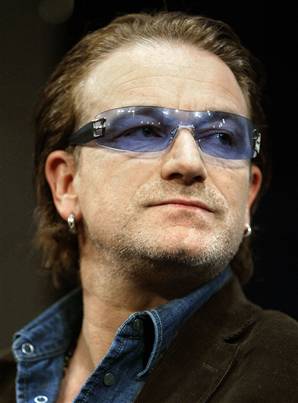


 Posts
Posts


